
Telemetry and Aerodynamics: A New Era of Predictive Insights in Moto Racing
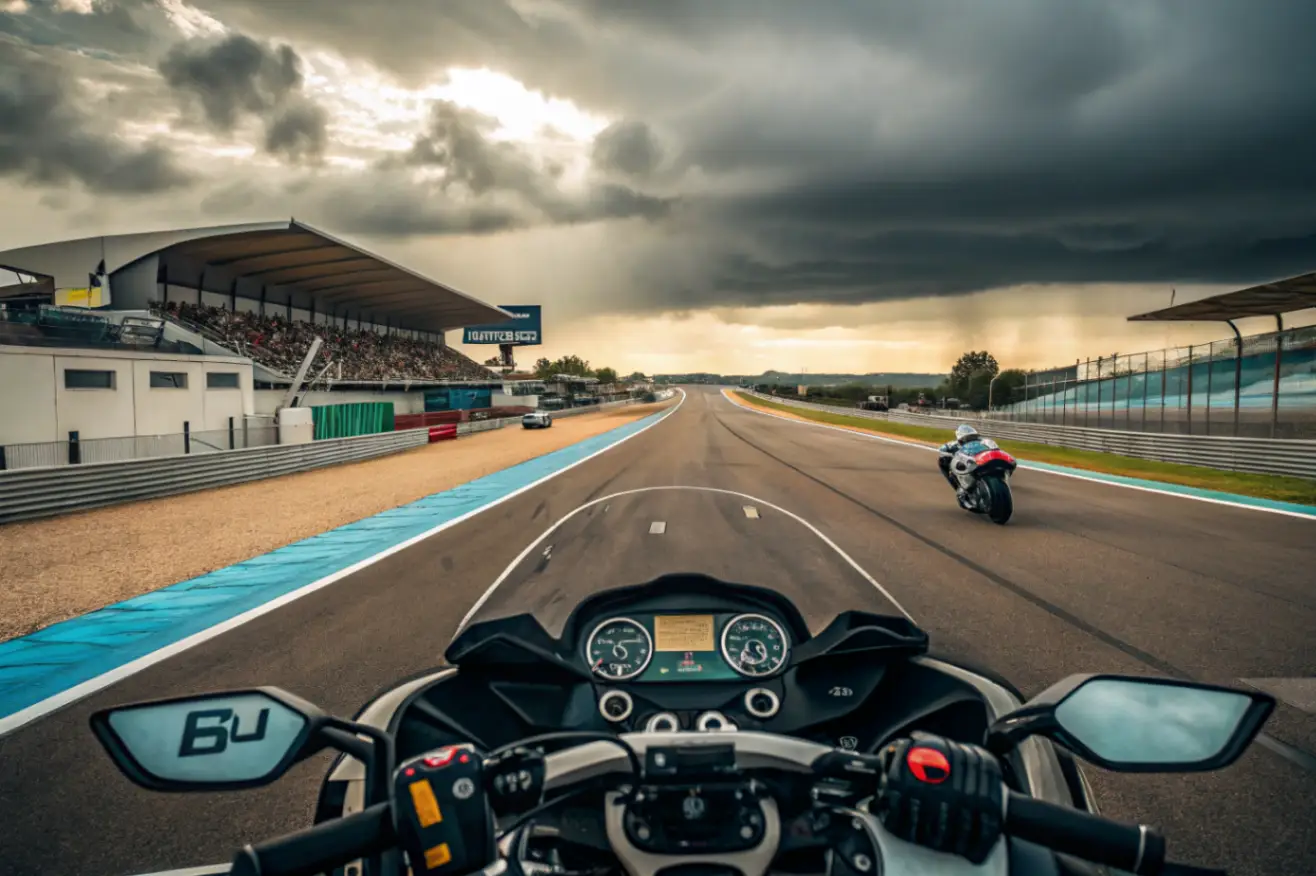
Modern moto racing is no longer driven solely by rider instinct and mechanical feel. With the rise of high-resolution telemetry and increasingly refined aerodynamic components, teams now rely on an analytical framework that merges engineering and predictive modelling. Telemetry streams thousands of data points per lap — throttle position, lean angle, brake pressure, suspension travel — while aerodynamics defines how the bike maintains stability, cuts through airflow and preserves tire life. Together, these technologies allow teams to anticipate performance trends, model race scenarios and refine strategies with near-scientific precision.
The Growing Influence of Telemetry in Race Analysis
Telemetry has evolved into the backbone of performance forecasting. Sensors embedded across the motorcycle create a continuous pipeline of information that helps engineers interpret how the bike behaves under varying conditions. What once required subjective rider feedback is now quantified with measurable indicators: heat distribution across brake systems, acceleration curves out of corners and micro-vibrations affecting chassis grip. When this data is processed through predictive algorithms, teams can identify performance windows, anticipate mechanical stress points and estimate optimal fuel and tire usage across the race distance.
Integrating Aerodynamics into Predictive Models
Aerodynamics influences nearly every phase of a racing lap, from corner entry stability to top-speed efficiency. Winglets, diffusers and air-channeling bodywork generate downforce that transforms how riders handle high-speed transitions. When aerodynamic data becomes part of the telemetry ecosystem, race engineers can build simulations that determine how airflow impacts tire degradation, braking force and rider fatigue. This integration is essential for forecasting not only lap times but also long-term trends across a race or entire season.
Why Telemetry-Aero Synergy Improves Predictive Accuracy
The combination of telemetry and aerodynamics leads to a robust predictive environment where small fluctuations in data can indicate upcoming performance shifts. Engineers can identify patterns such as reduced front-end stability at specific lean angles, aerodynamic stall in crosswinds or unexpected drag increases caused by minor bodywork damage. When these insights are interpreted early, teams gain the ability to adjust strategies mid-race, improving the accuracy of predictions about pace evolution, overtaking potential and tire conservation outcomes.
Before diving deeper into advanced forecasting methods, it is helpful to outline key elements that telemetry and aerodynamic models rely on. These components form the backbone of modern prediction systems and shape how racing teams interpret performance data.
Key inputs used in predictive modelling include:
- Real-time telemetry metrics such as lean angle, traction levels and brake force.
- Aerodynamic coefficients affecting downforce, drag and lift.
- Surface and weather data influencing airflow behavior.
- Tire temperature gradients and wear-rate indicators.
- Power delivery curves correlated with track layout characteristics.
These elements work together to create precise predictive structures. By synthesizing them in race simulations, analysts can forecast not only raw speed but also mechanical load trends, energy efficiency and overtaking feasibility. After establishing this foundation, we can explore how teams refine predictions using a broader dataset.
Building Forecasting Models Around Combined Data
When telemetry and aerodynamic records are layered together, forecasting accuracy increases dramatically. Teams can simulate how a bike will behave several laps ahead by analysing the correlation between airflow disruptions and mechanical variation. For example, if telemetry indicates early suspension compression spikes, aerodynamic data may reveal insufficient downforce at high lean. Predictive models then simulate how this imbalance could affect stability later in the race, especially as tire grip decreases.
Interpreting the Role of Track Layouts in Aero-Telemetry Analysis
Track architecture becomes an essential variable. Long straights amplify aerodynamic efficiency, while tight corner sequences highlight chassis behavior and traction consistency. Engineers evaluate airflow patterns using high-fidelity CFD models and merge them with telemetry to assess how the bike adapts to each segment. Predictions about overtaking opportunities, lap time deltas and optimal race lines emerge from this combined dataset.
The Importance of a Mid-Race Predictive Feedback Loop
One of the most powerful advantages of combining telemetry and aerodynamics is the creation of a continuous feedback loop. As riders complete laps, updated data recalibrates the models in real time. This dynamic forecasting enables precise mid-race adjustments: brake bias tuning, mapping changes, winglet angle considerations and even risk assessments related to tire stress. The predictive engine becomes smarter with each lap, enhancing decision-making for riders and pit crews.
To illustrate how teams compare telemetry and aerodynamic variables, the table below shows simplified categories commonly analysed during preparation. This example mirrors how engineers build internal decision maps.
| Metric Type | Example Variables | Purpose in Predictions |
|---|---|---|
| Telemetry Data | Brake pressure, throttle position, lean angle | Identifying handling behaviour and mechanical limits |
| Aerodynamic Data | Drag coefficient, downforce levels | Predicting high-speed stability and slipstream efficiency |
| Environmental Factors | Track temperature, wind direction | Understanding external forces acting on the bike |
| Tire Behaviour | Wear rate, heat cycles | Forecasting grip deterioration and performance drop-off |
| Power and Fuel Data | Torque delivery, consumption rate | Estimating race pace and stints |
Such structured comparison empowers analysts to run multiple simulations across different race conditions. By integrating these categories, prediction engines become highly sensitive to variations in airflow, mechanical stress and rider inputs. Immediately after analysing in-lap data, teams refine their strategy with updated insights and improved certainty.
After the table, it becomes clear that this multi-layered approach supports improved tactical flexibility. Each metric influences another: downforce affects grip, grip affects throttle application, throttle affects fuel load and fuel load affects speed. Understanding these dependencies allows teams to predict race evolution with exceptional accuracy.
How AI Enhances Telemetry-Aero Forecasting Systems
Modern forecasting relies heavily on machine learning models trained on historical race data and simulation output. AI identifies patterns too complex for manual interpretation, such as micro-oscillations in airflow that correlate with long-term tire degradation. When paired with telemetry, these predictions become even more refined. AI-enhanced forecasting helps determine ideal mapping configurations, predicts optimal pit-stop windows and identifies performance anomalies before they escalate into critical issues.
Rider Performance Predictions Supported by Telemetry and Aero Data
Rider behaviour is also modelled. AI systems analyse body-position telemetry and airflow interaction around the rider to predict fatigue patterns and stability challenges. Subtle adjustments in posture can generate meaningful changes in aerodynamic balance. Predictive software helps riders understand which movements minimize drag while maintaining control. This leads to more efficient race lines, reduced energy expenditure and improved finishing pace.
Challenges That Still Limit Predictive Accuracy
Despite continuous progress, some factors remain difficult to predict. Sudden weather changes, unexpected tire degradation or unforeseen mechanical issues introduce variables that even advanced models struggle to account for. Data anomalies caused by sensor malfunction can distort predictions, and teams must constantly validate incoming telemetry to maintain reliable forecasting. Moreover, aerodynamic components remain sensitive to minor damage, and even slight cracks or misalignments alter airflow more than models may anticipate.
Future Directions for Telemetry and Aerodynamic Integration
Looking ahead, real-time CFD modelling and rider-adaptive aero systems will likely redefine forecasting. These emerging innovations will allow motorcycles to adjust aerodynamic surfaces during a race, reacting to telemetry data to maintain ideal balance. Combined with 5G data transmission, teams will receive richer insights mid-lap, opening the door to predictive frameworks that adapt instantaneously to track conditions. As these technologies mature, forecasting may evolve into a nearly autonomous system, guiding strategic decisions with unprecedented precision.
Conclusion
Telemetry and aerodynamics have transformed the predictive landscape of moto racing. Their synergy supports highly accurate performance modelling, allowing teams to anticipate shifts in stability, tire behaviour and race pace with data-driven clarity. As AI and dynamic aero systems advance, the integration between mechanical insights and airflow intelligence will continue to strengthen, setting the stage for a new era of strategic racing based on predictive excellence.